

 Show
Show
Table of Contents
Dumbbells & weights for your home gym
Buy dumbbells & weights from AsVIVA
Sizes: 30 mm & 50 mm
✓ Free shipping (DE)
- ✓ 30-day return policy
- ✓ Fast delivery
- ✓ Expert support
- Materials & coatings
- Exercise variations & recommendations
- FAQ
- Getting started with weight training – what you should know
- An essential first step is proper preparation. Beginners in particular should start with lighter weights and fewer exercise sessions, increasing the load slowly and in small increments. This allows your body to adapt to the increasing load at a healthy pace, protecting muscles and joints from overuse. Also, make sure to schedule sufficient rest periods at the beginning. Pay attention to proper technique when lifting bars, weights, or kettlebells: Always lift with your legs, not your back – bend your knees before lifting the weight. Distribute the weight evenly on both sides and perform the movements in a controlled manner, not too fast and without momentum.
For beginners, around 4 to 5 kg is recommended as a starting weight; for barbells, a starting weight of around 20 kg is suitable. For the desired effect, 12 to 15 repetitions per exercise are usually recommended; advanced users working with heavier weights often manage with 6 to 8 repetitions. Ideally, divide your workout into multiple exercise variations to target different muscle groups.
✓ Free shipping (DE)
-
The basic rules
-
Never train without a warm-up: Prepare your muscles for the strain.
-
Establish a regular training schedule – up to 3 times a week for the first 8 weeks.
Advanced users can increase to up to 5 sessions, but should target different muscle groups.
Start every workout with complex compound exercises, followed by isolation exercises.
Train the flexor muscles first, then the extensors.
Train your limbs before your core muscles, as the core responds more sensitively.
What sizes of weight bars and weights are available?
-
For weight bars and weight plates, the sleeve/hole size must match. Generally, weight plates are available with a 30-mm hole size and a 50-mm hole size – with matching bars featuring a 30-mm- or 50-mm weight holder. The main difference lies in the maximum load: bars with a 30-mm weight holder are designed for lighter loads, 50-mm bars for heavier weights. There are large weight differences among plates and kettlebells – weight plates start as low as 0,5 kg, kettlebells usually from 4 kg, and the range extends up to weights of around 40 kg.
-
Benefits for effective strength training
-
Training with free weights offers a major advantage: You target muscles in isolation while simultaneously activating many supporting muscles that are otherwise often neglected. This stabilizes your body – especially your core – and improves your posture alongside your overall fitness. Unlike guided training on a home gym, free-weight workouts promote coordination significantly more. Kettlebells can also increase explosive power, which particularly benefits ball sport and martial arts athletes. Thus, weights are the ideal companion for building strength and endurance with plenty of flexibility – a perfect addition to strength training.
-
How do I build more muscle strength through weight training?
-
Muscles grow through intense strain: This creates microscopic tears at the cellular level that the body repairs – muscles regenerate and gain strength and mass. Regular weight training thus leads to a continuous increase in muscle mass and can even counteract natural muscle loss starting around age 30. As positive side effects, you burn more calories – even at rest – and strong muscles protect bones, tendons, and ligaments.
-
Overview of weight bars
When it comes to weight bars, there is a wide variety of options. Generally, a distinction is made between dumbbells and barbells – but you don't have to choose just one type. Training with both is highly recommended, as barbells and dumbbells challenge your strength and endurance in different ways and allow for a wider variety of exercises.
50 mm hole – along with matching bars with und einer or. Passend dazu gibt es entsprechende Hantelstangen mit einer 50 mm sleeve Benefits for effective strength training Training with free weights has a major advantage: You target muscles in isolation while simultaneously activating many supporting muscles that are otherwise often neglected. This stabilizes your body – especially your core – and improves your posture alongside your fitness. Unlike guided training on a home gym, free workouts with weights promote coordination much more effectively. Kettlebells can also increase explosive power, which particularly benefits team and combat sports athletes. Weights are therefore the ideal companion for building strength and endurance with plenty of flexibility – a perfect addition to. Der Unterschied zwischen den Gewichtsaufnahmen liegt hauptsächlich darin, dass die Stangen mit einer 30 mm Aufnahme eine geringere Belastbarkeit aufweisen. Dahingegen gibt es bei Hantelscheiben und Kettlebells große Gewichtsunterschiede. Hantelscheiben bekommen Sie schon ab 0,5 kg, während Kettlebells in der Regel bei 4 kg Gewicht einsteigen. Das Sortiment kann sich bis zu Gewichten von 40 kg erstrecken. Strength training
How do I build more muscle strength through weight training?
Muscles grow through intense strain: This creates microscopic tears at the cellular level that the body repairs – muscles regenerate and gain strength and mass. Regular weight training thus leads to a continuous increase in muscle mass and can even counteract natural muscle loss starting around age 30. As positive side effects, you burn more calories – even at rest – and strong muscles protect bones, tendons, and ligaments. Overview of weight bars When it comes to
In addition, you can choose between bars with or without ball bearings. Weight bars with ball bearings reduce pressure on the hands and joints: The bearing ensures free movement of the weight plates and thus a smooth, even rotation, making your workout more comfortable.
Weight plates & weight discs
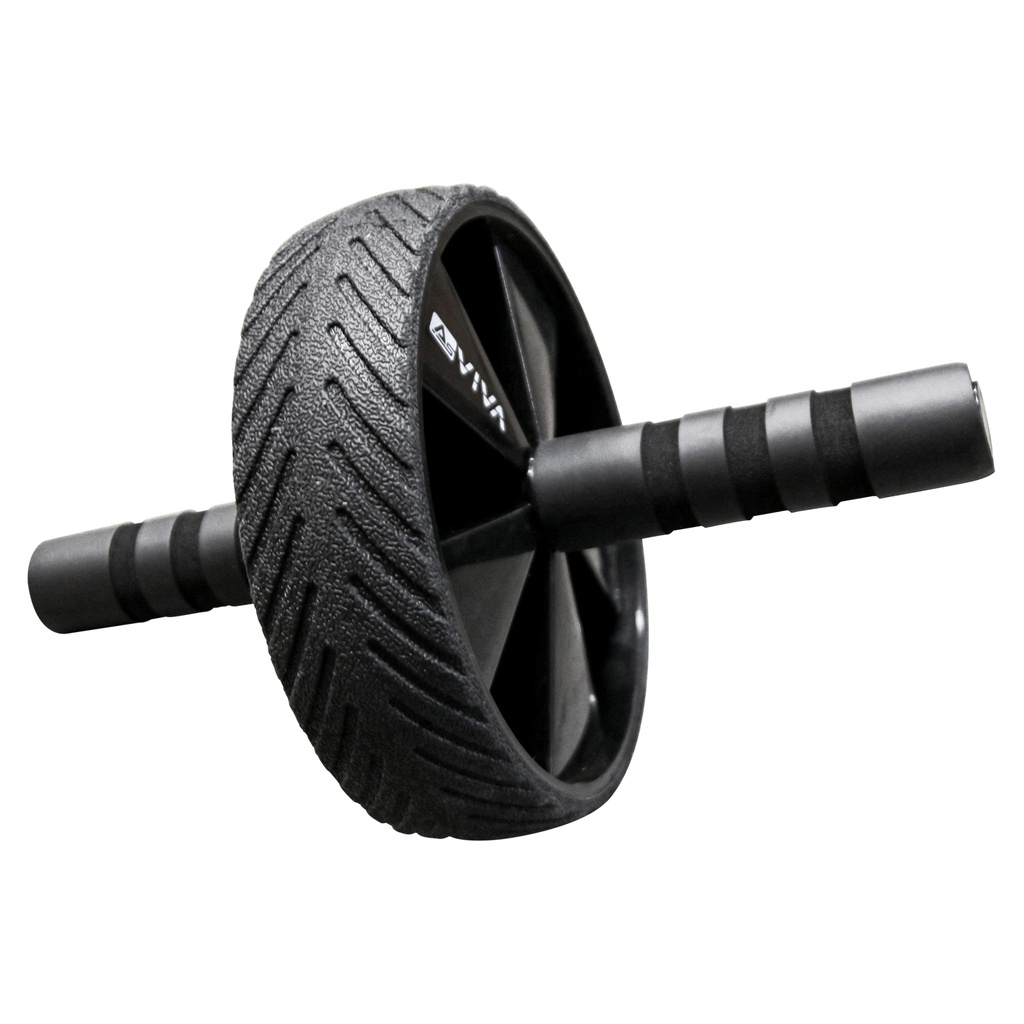
Thanks to its handy shape, it is extremely flexible and especially suitable for isolated training of the arms and upper body. It adapts well to human anatomy, balances muscular imbalances, and improves coordination.
Kettlebells
Kettlebells allow for a particularly effective free-weight workout. A distinction is made between "standard" kettlebells and standardized competition models, known as Competition Kettlebells. All feature a large, wide handle that can be smooth or contoured: A contoured handle shape conforms to your fingers and prevents slipping, while a smooth handle gives you maximum freedom of movement when gripping. The key feature of the kettlebell: Its center of gravity lies outside your hand, so the weight behaves slightly differently from your body with every movement – challenging your muscles to the maximum.
-
Materials & coatings
Weight bars are typically made of (usually chrome-plated) stainless steel. For weights, the variety of materials is greater: There are plates made of plastic or PVC, steel, or chrome, as well as classic bumper plates made from a special rubber compound. Bumper plates and solid cast iron are both extremely durable; a major difference lies primarily in the coating of the cast iron plates. -
reduce pressure on hands and joints: The bearing ensures free movement of the weight plates and thus smooth, even rotation, making your workout more comfortable.
Weight plates & weight discs Weight plates are often equipped with handle holes so they are easier to move and grip – allowing you to train with them even without a bar. Gripper plates with a 3G or 4G grip structure are common, named after the number of grip holes. A rounded stainless steel ring around the center sleeve provides additional convenience on many plates: Loading and unloading becomes easier while protecting the material from wear and tear. Kettlebells Kettlebells allow for a particularly effective free-weight workout. A distinction is made between "standard" kettlebells and standardized competition models, known as Competition Kettlebells. All feature a large, wide handle that can be smooth or contoured: A contoured handle shape conforms to your fingers and prevents slipping, while a smooth handle gives you maximum freedom of movement when gripping. The key feature of the kettlebell: Its center of gravity lies outside your hand, so the weight behaves slightly differently from your body with every movement – challenging your muscles to the maximum. -
Materials & coatings
Weight bars are typically made of (usually chrome-plated) stainless steel. For weights, the variety of materials is greater: There are plates made of plastic or PVC, steel, or chrome, as well as classic bumper plates made from a special rubber compound. Bumper plates and solid cast iron are both extremely durable; a major difference lies primarily in the coating of the cast iron plates. Rubber coating:Perfect for sensitive floors and quiet workouts. The rubber layer acts like a protective jacket on the plate, shielding against impacts, scratches, abrasion, and rust.
Polyurethane (PU/TPU): Extremely durable and robust, resistant to impacts, scratches, and chipping. This coating ensures high durability and reduces noise levels. Cast iron: Solidly constructed and exceptionally resistant to cracks and chipping. Some weight plates are made entirely of cast iron, while many feature a cast-iron core.
Black paint finish:
Different exercise variations & our recommendation
Whether training for forearms and triceps or movements for neck, biceps, and back – with dumbbells, weight plates, and kettlebells, you train a wide variety of muscle groups. Basically, almost every exercise can be performed with any weight: squats and lunges target the thigh and glute muscles, bench presses involve chest and triceps, shoulder presses, bicep curls, and tricep extensions strengthen arms and shoulders. Kettlebells are also suitable for swinging exercises that set the whole body in motion and increase stability and concentration. For many exercises, simply combine the weights with a weight bench.
Chrome plating: Primarily aesthetic, yet exceptionally corrosion-resistant, highly resistant to abrasion and wear, and extremely hard.Different exercise variations & our recommendation Whether training your forearms and triceps or performing movements for your neck, biceps, and back – with dumbbells, weight plates, and kettlebells, you train a wide variety of muscle groups. In principle, almost every exercise can be performed with any weight: squats and lunges target the thigh and gluteal muscles, bench presses engage the chest and triceps, while shoulder presses, bicep curls, and tricep extensions work the arms and shoulders. Kettlebells are also ideal for swinging exercises that set the whole body in motion, enhancing stability and focus. For many exercises, simply combine the weights with a, Weight bench The key benefits of weight training at a glance: Versatile workout options for the whole body Free-weight training with bars, weight plates, and kettlebells Improvement of coordination and motor skills
Versatile workout options for the whole body
Free-weight training with bars, weight plates, and kettlebells
-
Improvement of coordination and motor skills
Floor-friendly, durable coatings -
Strength and endurance training
Strong muscles protect bones, tendons, and ligaments and counteract age-related muscle loss -
View dumbbell set
Compact sets of 2 for an easy start and targeted toning at home – available in 0,5 kg, 0,75 kg, and 1 kg. -
Safe HV2
Secure weight collars (30 mm) -
Keep your weight plates securely on the bar: the Fast HV1 as a spring quick-release collar and the Safe HV2 as a secure quick-release collar – ideal for all 30-mm bars.
FAQ – Frequently asked questions about dumbbells & weights -
FAQ – Frequently asked questions about dumbbells & weights
Dumbbells or barbell?
Dumbbells are flexible and ideal for home workouts; a barbell enables heavy basic exercises – often combined with a weight bench. It is best to train with both.
Which weight is best for beginners?
Start light and increase in small increments. Around 4–5 kg is suitable for getting started; for a barbell, around 20 kg. Compact sets like the Power-Boost dumbbell set KH3 are a great place to start.
30 mm or 50 mm – what is the difference?
The number describes the sleeve diameter. 30 mm bars are designed for lower loads, 50 mm bars for heavier weights. It is important that the bar and plates have the same sleeve size.
Which weight collar is secure?
30 mm collars like the Fast HV1 or Safe HV2 keep the weight plates securely in place and can be opened and closed quickly.
Which material for weight plates?
Rubberized or PU/TPU-coated weight plates protect the floor and operate quietly – ideal for your home gym. Pure cast iron is exceptionally robust and durable.
How often should I train with dumbbells?
Beginners should train up to 3 times a week during the first 8 weeks, advanced users up to 5 times while rotating muscle groups. A warm-up, clean technique, and sufficient recovery breaks remain essential.
✓ keep the weight plates securely locked in place and can be opened and closed quickly.
✓ Which material for weight plates?